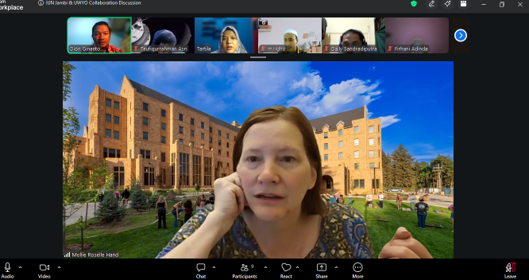
Jambi, UIN Sulthan Thaha Saifuddin Jambi and the University of Wyoming have held an online meeting to discuss the launch of a Collaborative Online International Learning (COIL) class, following a memorandum of understanding signed earlier this year.
The meeting, conducted via Zoom on 20 May at 20:30 WIB, brought together Mollie Hands from the University of Wyoming, Dion Ginanto, Coordinator of the International Cooperation Service Centre at UIN Jambi, English lecturer Dr Tartilla, and postgraduate English students from UIN Jambi.
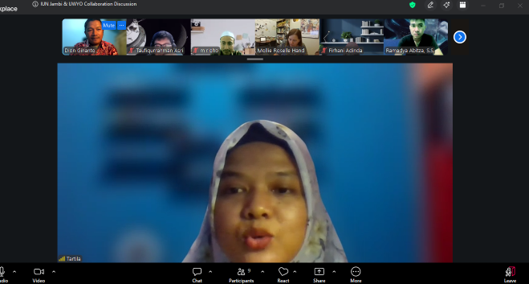
The session served as a planning meeting to design the lesson plan for the joint class. The programme will combine undergraduate and selected postgraduate English students from UIN Jambi with their counterparts at the University of Wyoming. Learning will take place through synchronous sessions on Zoom and asynchronous activities coordinated via WhatsApp groups.
Participants discussed potential themes for the course, including Indonesian culture such as batik, traditional cuisine, and gamelan, alongside American cultural topics such as cowboys and branding. Two synchronous meetings are planned, followed by asynchronous group work and collaborative assignments.
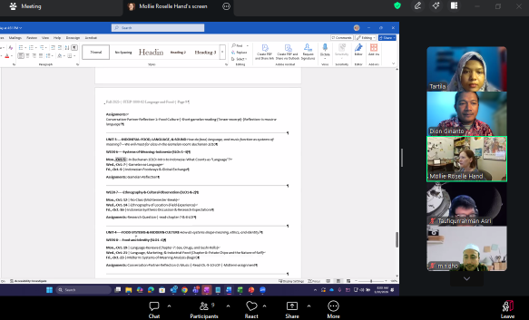
Mollie Hands expressed her enthusiasm for the initiative. “I am very interested in this activity and cannot wait to start the class. Given the readiness on both sides, we can begin in September. We will hold another planning meeting in August,” she said.
Dion Ginanto highlighted the broader significance of the collaboration. “This joint class will broaden perspectives for both universities. Students from Jambi and Wyoming will learn from each other, making this a tangible demonstration of our rector’s commitment to positioning UIN Jambi as a world-class university,” he noted.
Dr Tartilla emphasised the importance of balanced participation. “We will prepare the class, and it would be ideal if we can match numbers. UIN Jambi will have 18 students and Wyoming also 18. This way, each group can consist of two students from each university, enabling more intensive discussions,” she explained.
The COIL class is expected to strengthen academic ties between the two institutions and provide students with direct experience of intercultural learning.